What Seasonal Eating Actually Means
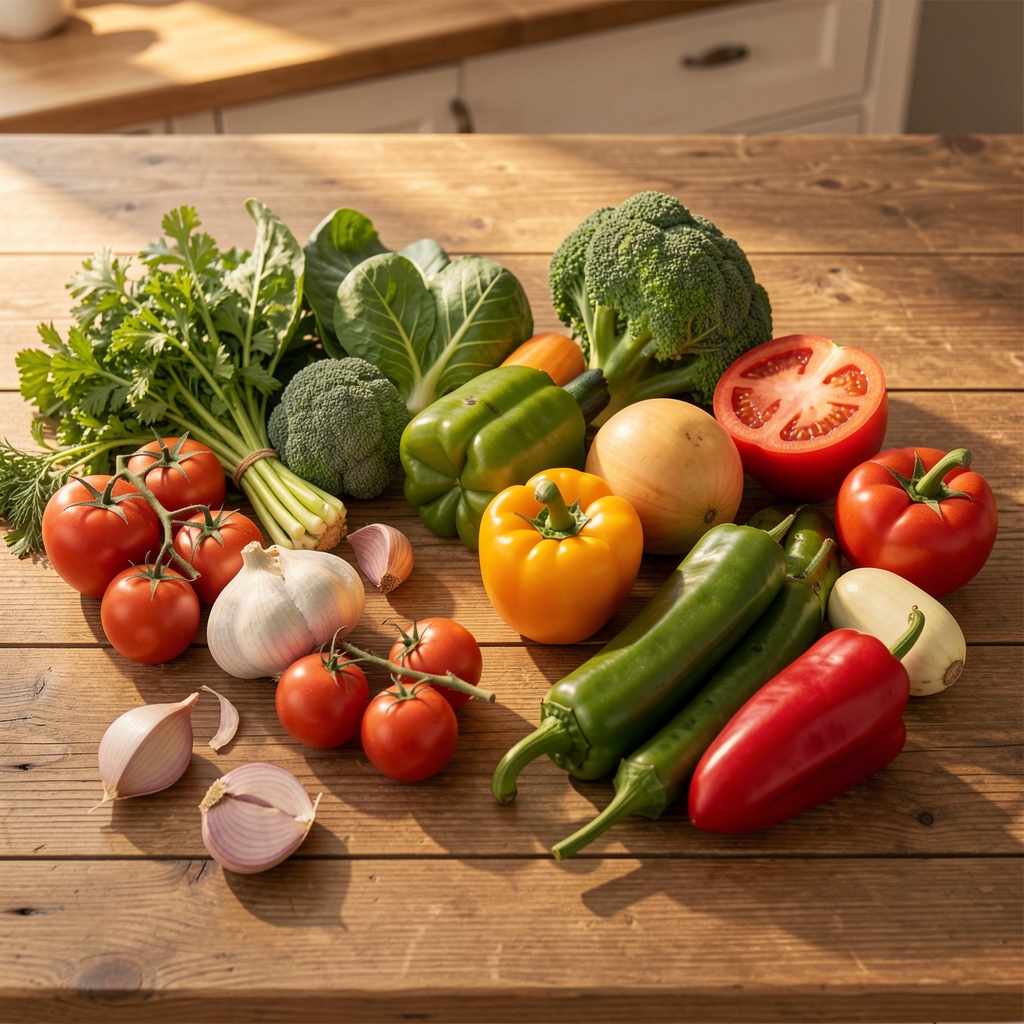
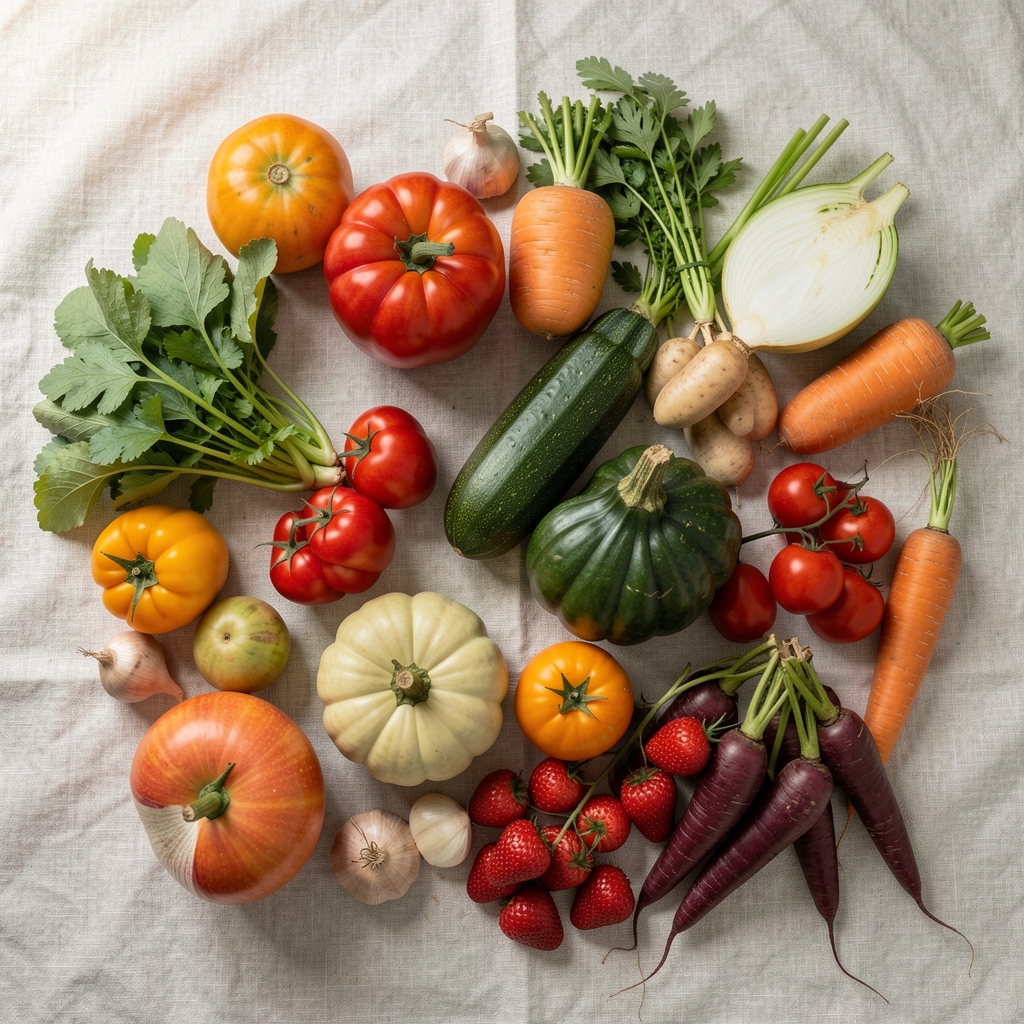
The phrase "seasonal eating" has acquired a somewhat performative quality in recent food writing — associated with weekend farmers' markets and photogenic root vegetables. Stripped of that framing, it describes something more fundamental: the practice of orienting a household's diet around what is locally available, grown to its natural harvest timing, and consumed within a reasonable period of its collection.
The nutritional case for seasonal produce rests on a straightforward premise: vegetables and fruits that travel shorter distances and spend less time in storage retain more of the nutrients present at harvest. The difference is not always dramatic, and it varies considerably by variety. But the general direction of the relationship — fresh, local, in-season produce is nutritionally denser than long-stored equivalents — is supported by a substantial body of food science research.
There is also a secondary argument, less often made: seasonal eating imposes variety by default. A household eating primarily in-season produce cannot eat the same vegetables in January and July. That imposed rotation produces, without any deliberate planning, a wider range of plant-based foods across the year — which is precisely what nutrition researchers describe when discussing the foundations of a balanced eating pattern.
The British Winter Table
The British winter growing season is not sparse. Its standard narrative — that there is little to eat locally between November and March — does not survive contact with the actual calendar. Root vegetables are at their peak: parsnip, swede, celeriac, beetroot, carrot. Brassicas dominate: kale, purple sprouting broccoli, Brussels sprouts, cavolo nero, savoy cabbage. Stored apples and pears from the autumn remain in good condition into January. Leeks, chard, and spinach are available throughout.
The winter plate, constructed from this catalogue, is nutritionally substantial. The brassica family contributes some of the highest concentrations of fibre and vitamins C and K available in the plant kingdom. Root vegetables offer complex carbohydrates, folate, and a range of minerals. The repeated appearance of these ingredients across winter meals, organised by what is available rather than by preference, produces exactly the kind of dietary diversity that is associated — in peer-reviewed research on healthy eating habits — with a well-functioning digestive system and adequate micronutrient intake.
This is not coincidence. The seasonal calendar of a temperate climate produces variety across months even when individual months appear limited. The household that eats seasonally through an entire year covers far more nutritional ground than one that selects from a theoretically unlimited but practically repetitive supermarket repertoire.

Spring: The Reorientation
March and April in Britain mark a nutritional transition. The brassicas thin. New growth arrives: wild garlic in hedgerows, asparagus in the first weeks of May, rhubarb through spring, watercress returning to streams and market stalls. The plate lightens, not by design but by availability. Lighter cooking methods return naturally — raw preparations, brief steaming, dressings rather than slow-cooked reductions.
The reorientation is also an opportunity to observe how the gut responds to dietary change. Many writers on gut-friendly recipes note that gradual, seasonal shifts in plant variety — rather than abrupt additions of fermented or probiotic-adjacent foods — produce the most consistent long-term improvements in digestive comfort. The seasonal calendar does this automatically. Spring's new growth arrives incrementally, as availability expands through the warming weeks.
A practical note: the asparagus season in Britain runs approximately six weeks. For a household eating seasonally, this brief window becomes, by its very scarcity, an occasion. The same ingredient eaten throughout the year loses that quality. Seasonal eating is, in this small way, a structure of anticipation — which is also, neurologically, a structure of heightened attention. The arrival of seasonal produce is noticed; food consumed unremarkably from unlimited supply is not.
The imposed rotation of seasonal produce produces, without deliberate planning, a wider range of plant-based foods across the year — which is precisely the foundation of a balanced eating pattern.
Practical Observations for a Working Household
The argument for seasonal eating is often presented as an aesthetic or ethical one — which may explain why it has been absorbed into food culture without substantially changing purchasing behaviour. The practical case is more compelling. Seasonal produce in Britain is, at its peak, cheaper than imported equivalents. The winter kale available at a good greengrocer in January costs less than the asparagus flown from Peru in December, and is nutritionally superior.
A working household might approach seasonal eating through a simple reorientation of the weekly shop: identifying two or three currently in-season vegetables, building the week's meals outward from those, and regarding everything else as supplementary. This is not a restrictive approach. It is a structuring one — and structure, as previous articles in this almanac have documented, is the single most consistent predictor of nutritional quality in a household's daily eating.
Gut-friendly recipes that draw on fermented and living foods — kimchi, sauerkraut, live yoghurt, kefir — can be integrated with seasonal cooking by regarding the fermented element as a condiment or side, variable across the year, while the seasonal base of the meal changes with the calendar. The result is a diet that is varied by the week and the month, structured by availability rather than willpower, and nutritionally broader than most households achieve through deliberate planning alone.
A Note on the Nutritional Literature
A recurring observation in the published research on diet and nutrition is that the populations with the most consistent long-term nutritional outcomes are not those following the most precisely constructed plans. They are those with the most stable, habitual relationships to a wide range of whole foods — relationships that were, historically, structured by seasonal availability. The nutritionist's guidance and the seasonal calendar are, in this light, pointing toward the same underlying principle: variety, stability, and attention to what is present.
- Seasonal produce is nutritionally denser on average than long-stored equivalents, due to reduced transit time and less time in cold storage.
- Eating seasonally imposes variety by default: a household cannot eat the same produce in January and July.
- The British winter growing season includes nutritionally substantial options including kale, root vegetables, and brassicas.
- Seasonal transitions — winter to spring — produce gradual dietary variety that is associated with steady gut function and balanced nutrition.
- A practical approach: select two or three in-season vegetables weekly, build meals outward from those, regard all else as supplementary.